The Americasc. 1200-1450Between c. 1200–1450, societies in the Americas developed independently through environmental adaptation and agricultural innovation, producing complex regional cultures and powerful empires like the Aztecs and Incas, whose development was shaped by isolation and limited interregional interaction.
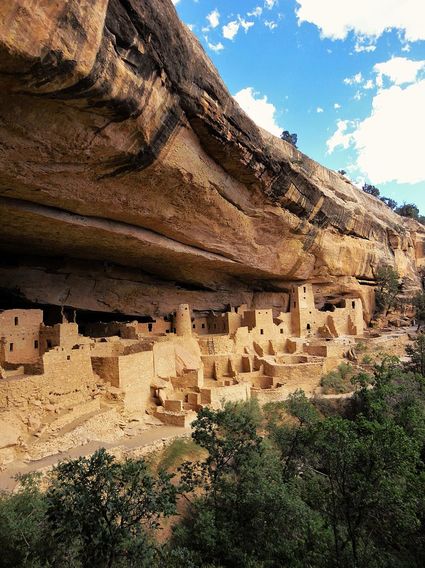
Cliff Palace, New Mexico, the largest cliff dwelling in North America, was built by the Ancestral Puebloans around 1200 CE.
|
Contents
Objectives
- Explain how and why states in the Americas developed and changed over time.
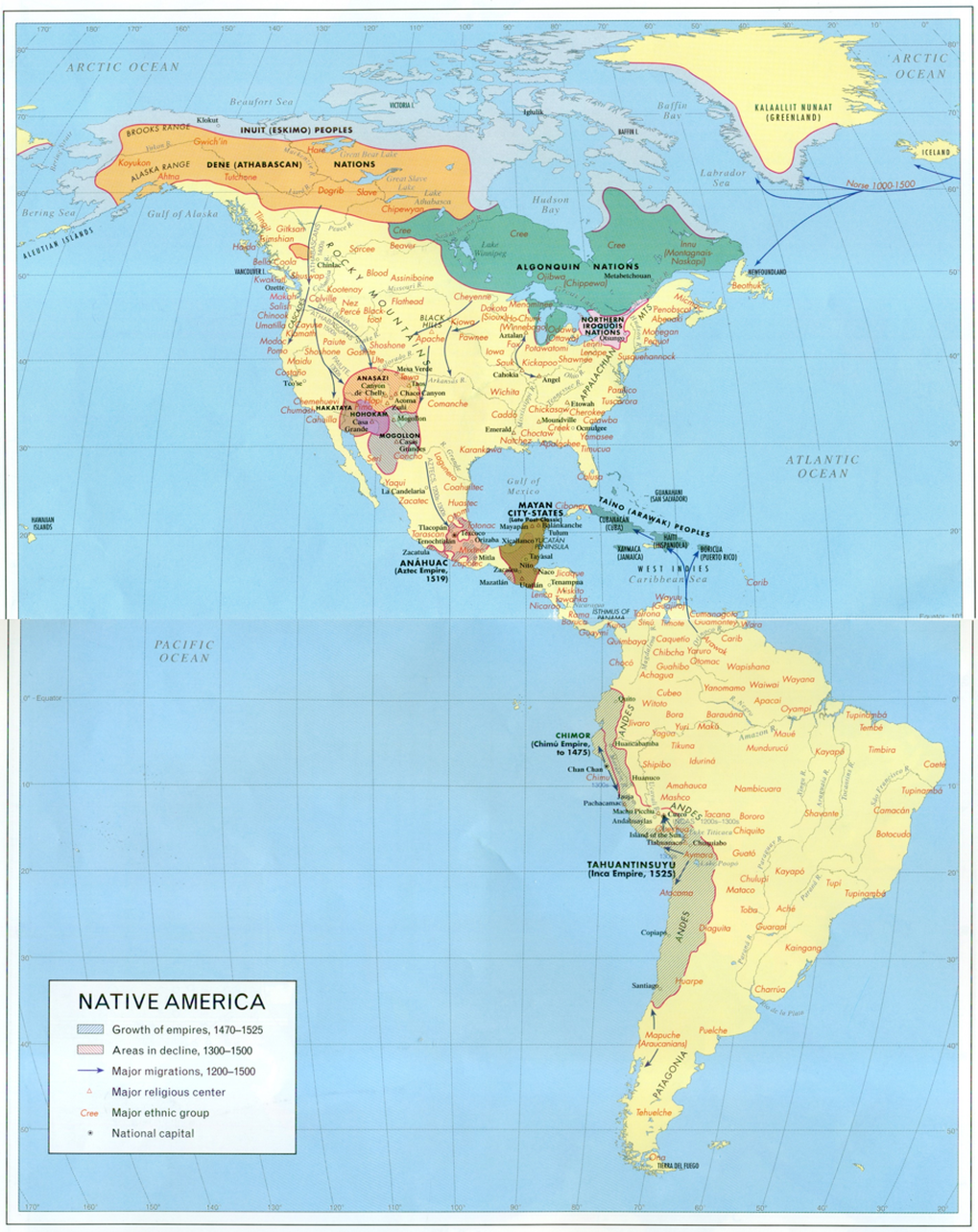
In the Americas, as in Afro-Eurasia, state systems demonstrated continuity, innovation, and diversity, and expanded in scope and reach.
Explain how geographic isolation shaped the development of American civilizations compared to Afro-Eurasia.
Geographic isolation profoundly shaped the development of American civilizations, setting them apart from the interconnected societies of Afro-Eurasia. With limited interregional contact, the Americas lacked the dense networks of trade and communication that linked Europe, Africa, and Asia, where ideas, technologies, crops, and diseases circulated widely. As a result, American societies such as the Maya, Aztec, and Inca developed independently, generating sophisticated political systems, agricultural techniques, and cultural traditions without sustained external influence.
This isolation fostered remarkable regional diversity, as societies adapted to distinct environments—from Andean highlands to Mesoamerican lowlands—without the homogenizing effects of long-distance exchange. However, it also limited the diffusion of key innovations, such as metal tools or large domesticated animals, which spread more readily across Afro-Eurasia. In contrast, the Old World’s interconnectedness accelerated technological development and created shared patterns of economic and political organization.
Thus, geographic isolation was both a constraint and a catalyst. It encouraged independent innovation and cultural uniqueness in the Americas, while simultaneously restricting the exchange networks that, in Afro-Eurasia, drove cumulative development and integration across vast regions.
Geographic isolation profoundly shaped the development of American civilizations, setting them apart from the interconnected societies of Afro-Eurasia. With limited interregional contact, the Americas lacked the dense networks of trade and communication that linked Europe, Africa, and Asia, where ideas, technologies, crops, and diseases circulated widely. As a result, American societies such as the Maya, Aztec, and Inca developed independently, generating sophisticated political systems, agricultural techniques, and cultural traditions without sustained external influence.
This isolation fostered remarkable regional diversity, as societies adapted to distinct environments—from Andean highlands to Mesoamerican lowlands—without the homogenizing effects of long-distance exchange. However, it also limited the diffusion of key innovations, such as metal tools or large domesticated animals, which spread more readily across Afro-Eurasia. In contrast, the Old World’s interconnectedness accelerated technological development and created shared patterns of economic and political organization.
Thus, geographic isolation was both a constraint and a catalyst. It encouraged independent innovation and cultural uniqueness in the Americas, while simultaneously restricting the exchange networks that, in Afro-Eurasia, drove cumulative development and integration across vast regions.
Moundbuilders & Cliff-dwellers
|
Cahokia, near the confluence of the major Mississippi, Missouri, and Ohio rivers, was the nexus of Native American trade in the present day eastern United States. It was home to an estimated 10,000-30,000 people.
|
Explain how environmental adaptation and agriculture shaped early American societies.
Early American societies were profoundly shaped by environmental adaptation and agricultural innovation, producing diverse regional cultures across North America. In the Mississippi River valley, the Moundbuilders, particularly the Mississippian culture, constructed large ceremonial and political centers such as Cahokia, where maize cultivation supported dense populations and complex social hierarchies. These societies engineered their landscapes through earthen mounds that served as platforms for religious and political life, demonstrating how agriculture enabled urban development.
In the arid Southwest, the Pueblo people, sometimes referred to as the Anasazi, adapted to challenging conditions by building multi-story cliff-dwellings at sites like Mesa Verde. Their pueblos and ceremonial spaces known as kivas reflected both environmental necessity and spiritual life, while irrigation and three-sister farming—the intercropping of maize, beans, and squash—maximized agricultural productivity in a harsh climate. Across these regions, the lack of large domesticated animals meant that human labor remained central to production and transport, shaping economic organization.
Elsewhere, groups such as the Navajo and Haudenosaunee, or Iroquois, developed distinct systems of land use and social organization suited to their environments, combining agriculture, hunting, and mobility. In all cases, early American societies demonstrated a deep understanding of ecological balance, using available resources efficiently to sustain communities and support cultural complexity.
Early American societies were profoundly shaped by environmental adaptation and agricultural innovation, producing diverse regional cultures across North America. In the Mississippi River valley, the Moundbuilders, particularly the Mississippian culture, constructed large ceremonial and political centers such as Cahokia, where maize cultivation supported dense populations and complex social hierarchies. These societies engineered their landscapes through earthen mounds that served as platforms for religious and political life, demonstrating how agriculture enabled urban development.
In the arid Southwest, the Pueblo people, sometimes referred to as the Anasazi, adapted to challenging conditions by building multi-story cliff-dwellings at sites like Mesa Verde. Their pueblos and ceremonial spaces known as kivas reflected both environmental necessity and spiritual life, while irrigation and three-sister farming—the intercropping of maize, beans, and squash—maximized agricultural productivity in a harsh climate. Across these regions, the lack of large domesticated animals meant that human labor remained central to production and transport, shaping economic organization.
Elsewhere, groups such as the Navajo and Haudenosaunee, or Iroquois, developed distinct systems of land use and social organization suited to their environments, combining agriculture, hunting, and mobility. In all cases, early American societies demonstrated a deep understanding of ecological balance, using available resources efficiently to sustain communities and support cultural complexity.
|
Article: Riddles of the Anasazi
|
audio pronunciation guide:
|
Aztecs
|
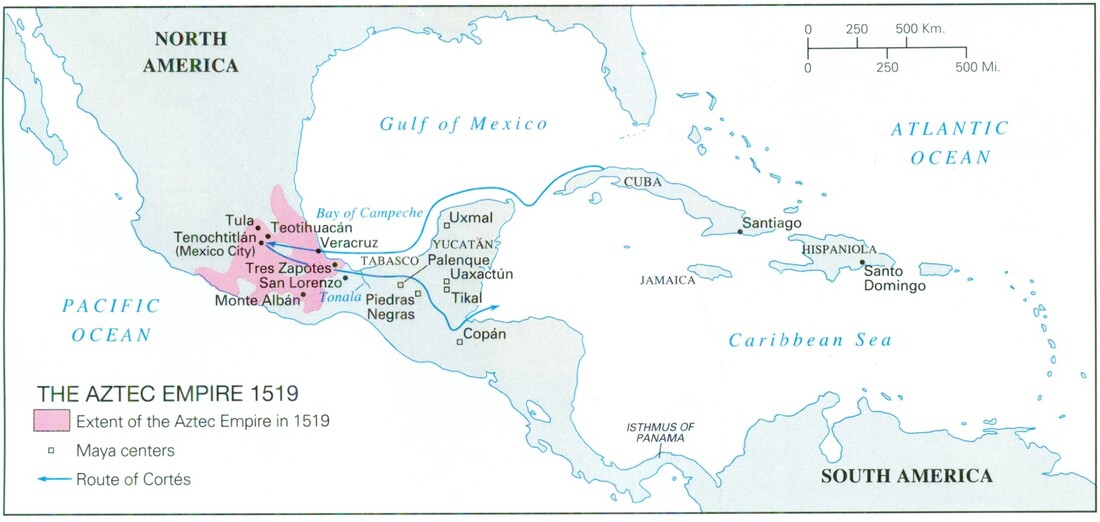
Mayans and other civilizations of pre-Columbian Mesoamerica
|
Explain how earlier Mesoamerican cultures influenced later empires.
Earlier Mesoamerican cultures, particularly the Toltecs, provided powerful cultural and ideological models that later empires adapted to legitimize their rule. Centered at Tula, the Toltecs were remembered not only for their military strength but for their association with refined culture, religious authority, and urban sophistication. Figures such as Topiltzin Quetzalcoatl became central to this legacy, blending historical memory with myth. The deity Quetzalcoatl, linked to wisdom, creation, and priestly authority, emerged as a unifying symbol that later societies invoked to connect themselves to a prestigious past. Subsequent empires, especially the Aztecs, drew heavily on Toltec traditions to reinforce their own legitimacy. By claiming descent from or cultural continuity with the Toltecs, they positioned themselves as inheritors of an established and respected civilization. Religious practices, artistic styles, and political ideals were adapted and reinterpreted, demonstrating how earlier traditions could be reshaped to serve new contexts. In this way, the Toltecs functioned as a cultural touchstone, providing a shared historical and mythological framework that later Mesoamerican states used to justify authority, unify populations, and elevate their place within the region’s long civilizational narrative. |
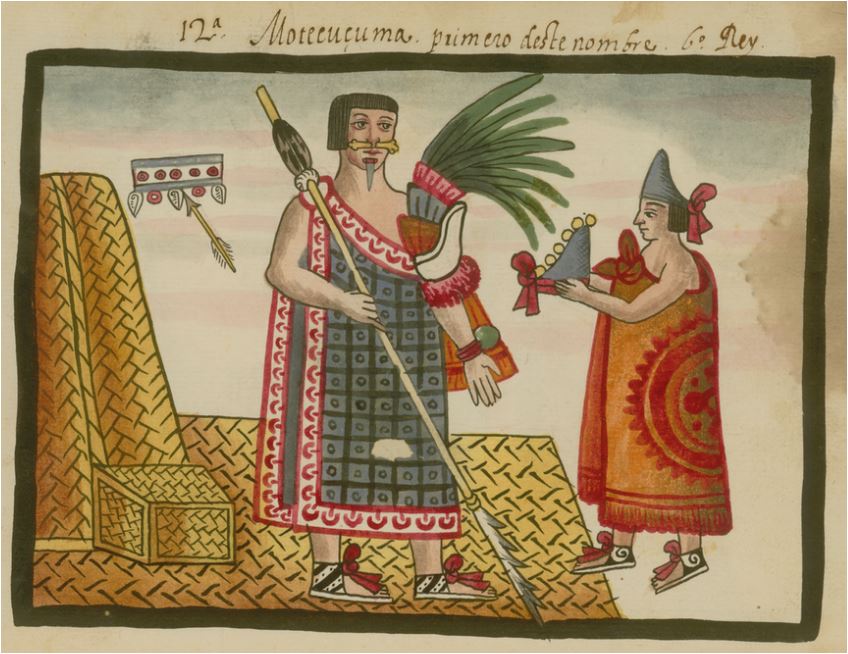
coronation of Aztec emperor Motecuzuma I
Analyze how the Mexica established the Aztec Empire in Mesoamerica.
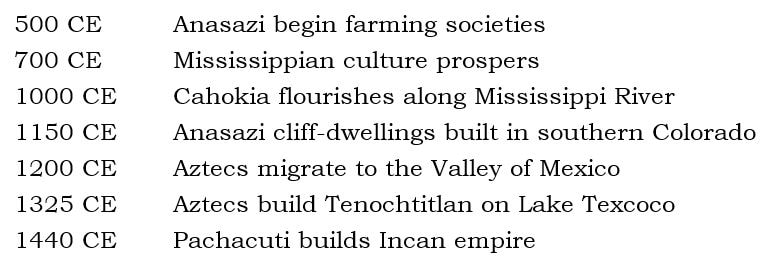
The Mexica, later known as the Aztecs, established a powerful empire in Mesoamerica through a combination of migration, military conquest, and strategic alliances. Originally a semi-nomadic people, the Mexica migrated into the central valley of Mexico and, according to tradition, settled where they observed a sacred sign—an eagle perched on a cactus—leading them to found Tenochtitlan on an island in Lake Texcoco. From these modest beginnings, they transformed their city into a thriving political and economic center.
Their rise to power accelerated through the Triple Alliance with Texcoco and Tlacopan, which enabled coordinated military expansion and the division of conquered territories. Leaders such as Itzcoatl, Nezahualcoyotl, and Montezuma I strengthened this system by consolidating authority and extending control across the region. Conquered peoples were integrated into a vast tribute system, supplying goods, labor, and captives that sustained imperial power.
This system was reinforced by a rigid social hierarchy and a governing strategy that allowed local rulers to remain in place as long as tribute obligations were fulfilled. In this way, the Aztecs combined migration-driven resilience, alliance-building, and economic extraction to construct a far-reaching empire rooted in both cooperation and coercion.
The Mexica, later known as the Aztecs, established a powerful empire in Mesoamerica through a combination of migration, military conquest, and strategic alliances. Originally a semi-nomadic people, the Mexica migrated into the central valley of Mexico and, according to tradition, settled where they observed a sacred sign—an eagle perched on a cactus—leading them to found Tenochtitlan on an island in Lake Texcoco. From these modest beginnings, they transformed their city into a thriving political and economic center.
Their rise to power accelerated through the Triple Alliance with Texcoco and Tlacopan, which enabled coordinated military expansion and the division of conquered territories. Leaders such as Itzcoatl, Nezahualcoyotl, and Montezuma I strengthened this system by consolidating authority and extending control across the region. Conquered peoples were integrated into a vast tribute system, supplying goods, labor, and captives that sustained imperial power.
This system was reinforced by a rigid social hierarchy and a governing strategy that allowed local rulers to remain in place as long as tribute obligations were fulfilled. In this way, the Aztecs combined migration-driven resilience, alliance-building, and economic extraction to construct a far-reaching empire rooted in both cooperation and coercion.
Tenochtitlan was one of the largest cities in the world at the time of Spanish conquest in the 1520s.
Discuss Aztec social and economic organization.
Aztec society was organized through tightly integrated social and economic structures that supported both urban life and imperial expansion. At the local level, communities were organized into calpulli, kin-based groups that managed land distribution, coordinated agricultural labor, and fulfilled tribute obligations. These units formed the foundation of social order, linking families to broader political and economic systems while reinforcing hierarchy and collective responsibility.
Agricultural productivity was sustained through innovations such as chinampas, artificial floating fields built in shallow lake environments around Tenochtitlan. These highly efficient plots produced multiple harvests each year, supporting a dense population and generating surplus for trade and tribute. Beyond local production, long-distance commerce was carried out by pochteca, a specialized class of merchants who traded luxury goods across Mesoamerica. They also acted as cultural intermediaries and, at times, intelligence gatherers for the state, extending Aztec influence beyond direct political control.
Together, these elements created a dynamic system in which economic life was both locally organized and imperially connected. The calpulli ensured stability and production at the community level, chinampas maximized agricultural output, and pochteca linked the empire to wider trade networks. In this structure, social organization and economic activity were closely intertwined, sustaining one of the most sophisticated urban civilizations in the pre-Columbian Americas.
Aztec society was organized through tightly integrated social and economic structures that supported both urban life and imperial expansion. At the local level, communities were organized into calpulli, kin-based groups that managed land distribution, coordinated agricultural labor, and fulfilled tribute obligations. These units formed the foundation of social order, linking families to broader political and economic systems while reinforcing hierarchy and collective responsibility.
Agricultural productivity was sustained through innovations such as chinampas, artificial floating fields built in shallow lake environments around Tenochtitlan. These highly efficient plots produced multiple harvests each year, supporting a dense population and generating surplus for trade and tribute. Beyond local production, long-distance commerce was carried out by pochteca, a specialized class of merchants who traded luxury goods across Mesoamerica. They also acted as cultural intermediaries and, at times, intelligence gatherers for the state, extending Aztec influence beyond direct political control.
Together, these elements created a dynamic system in which economic life was both locally organized and imperially connected. The calpulli ensured stability and production at the community level, chinampas maximized agricultural output, and pochteca linked the empire to wider trade networks. In this structure, social organization and economic activity were closely intertwined, sustaining one of the most sophisticated urban civilizations in the pre-Columbian Americas.
|
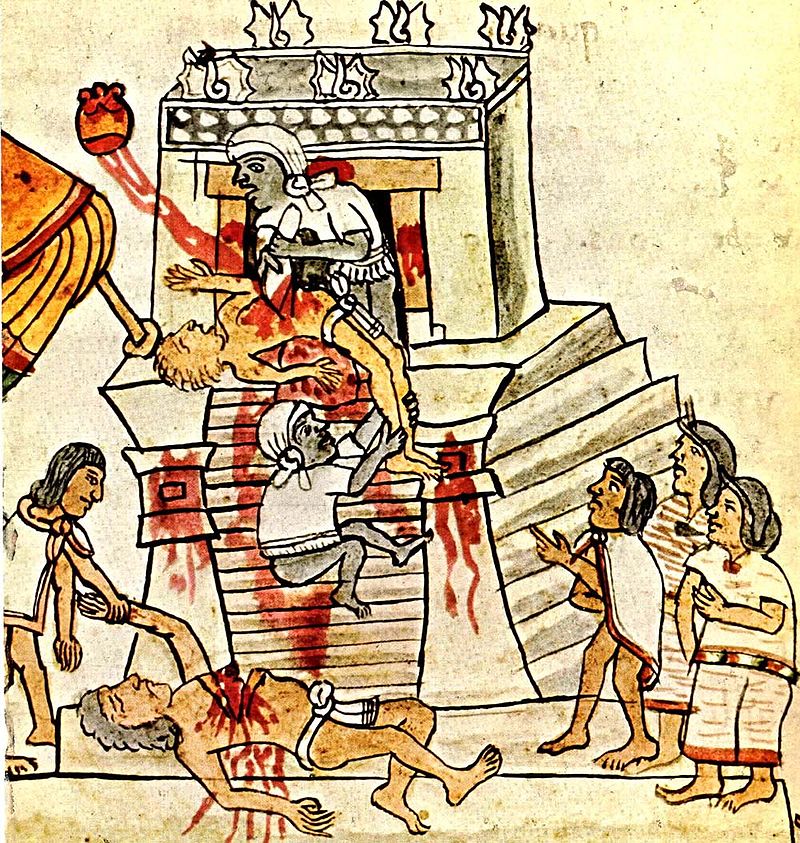
The Aztecs practiced human sacrifice.
|
Explain Aztec religious beliefs and practices.
Aztec religion was a central force in shaping political authority, social life, and warfare, rooted in a worldview that emphasized the fragile balance of the cosmos. At the heart of this system stood the Great Temple in Tenochtitlan, a towering ceremonial structure dedicated to key deities, most prominently Huitzilopochtli, the sun and war god, and Tlaloc, the rain and agricultural deity. Other important gods, such as Tezcatlipoca, represented power, fate, and the unseen forces that governed human life. Together, this pantheon reflected a universe sustained through divine interaction and human obligation. Central to Aztec practice was human sacrifice, which was believed to nourish the gods and ensure the continuation of the natural order, particularly the rising of the sun and the fertility of the earth. Warfare was therefore not only political but sacred, as capturing prisoners for sacrifice became a religious duty. Rituals, festivals, and offerings reinforced the connection between the human and divine realms, integrating religion into every aspect of life. In this system, belief and practice were inseparable from governance and expansion. Religion legitimized authority, justified conquest, and provided a unifying framework for the empire, making it both a spiritual system and a mechanism of control. |
audio pronunciation guide:
Incas
Explain the formation of the Inca centralized state and economy.
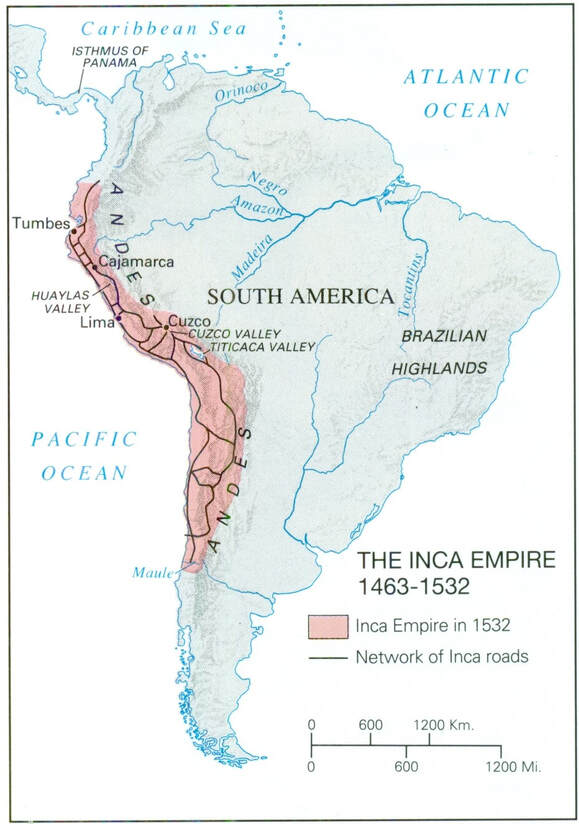
The Incas forged one of the most centralized states in the premodern world by integrating political authority, labor organization, and economic control into a unified system. Under Pachacuti, the empire of Tawantinsuyu expanded rapidly from its capital at Cuzco, transforming a regional kingdom into a vast imperial network. At the center stood the Sapa Inca, whose authority combined political leadership with sacred status, reinforcing obedience and cohesion across diverse populations.
This expansion was sustained through a highly organized centralized bureaucracy that coordinated resources and enforced policy across regions. The state promoted Quechua as a common language, facilitating communication and integration. Social organization rested on the ayllu, kin-based communities that structured land use and labor obligations. Rather than relying on tribute in goods, the Inca implemented the Mita, a system of required public labor that supplied workers for agriculture, construction, and state projects.
This labor system supported a state-controlled economy in which the government directed production, stored surplus goods, and redistributed resources to meet collective needs. In this model, economic life was not driven by markets but by coordinated planning and reciprocity. Together, these institutions created a tightly integrated state in which political authority and economic organization were inseparable, enabling the Inca to maintain control over a vast and diverse empire.
The Incas forged one of the most centralized states in the premodern world by integrating political authority, labor organization, and economic control into a unified system. Under Pachacuti, the empire of Tawantinsuyu expanded rapidly from its capital at Cuzco, transforming a regional kingdom into a vast imperial network. At the center stood the Sapa Inca, whose authority combined political leadership with sacred status, reinforcing obedience and cohesion across diverse populations.
This expansion was sustained through a highly organized centralized bureaucracy that coordinated resources and enforced policy across regions. The state promoted Quechua as a common language, facilitating communication and integration. Social organization rested on the ayllu, kin-based communities that structured land use and labor obligations. Rather than relying on tribute in goods, the Inca implemented the Mita, a system of required public labor that supplied workers for agriculture, construction, and state projects.
This labor system supported a state-controlled economy in which the government directed production, stored surplus goods, and redistributed resources to meet collective needs. In this model, economic life was not driven by markets but by coordinated planning and reciprocity. Together, these institutions created a tightly integrated state in which political authority and economic organization were inseparable, enabling the Inca to maintain control over a vast and diverse empire.
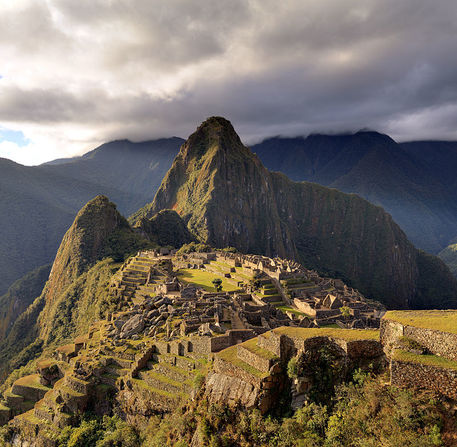
Machu Picchu was built as an estate for the Inca emperor Pachacuti around 1450 AD. It was abandoned after the Spanish conquest of Peru and remained largely forgotten until its rediscovery by an American archaeologist in 1911 AD.
Explain Incan religious beliefs and practices.
Inca religion was deeply integrated into state power, forming a state religion of sun worship that reinforced both political authority and social cohesion. At the center of belief stood Inti, the sun god, regarded as the divine ancestor of the ruling elite, while Viracocha was honored as a creator deity associated with the origins of the world. The Sapa Inca was seen as a representative of Inti on earth, linking governance directly to sacred authority and legitimizing imperial rule.
Religious practice was institutionalized through temples, rituals, and specialized roles. The Temple of the Sun in Cuzco served as a major ceremonial center, housing offerings and symbolizing the empire’s spiritual core. Sacred sites such as Machu Picchu further reflected the integration of religion with landscape, as architecture aligned with natural and celestial features. Religious life also depended on designated groups such as the Mamakuna, women devoted to ritual service and textile production for the state, and the Yanakuna, individuals assigned to serve the elite and religious institutions.
Through these practices, religion structured both public and private life, reinforcing hierarchy, unity, and cosmic order. In this system, belief was not separate from governance—it was a central mechanism through which the Inca state maintained authority and cohesion across its vast empire.
Inca religion was deeply integrated into state power, forming a state religion of sun worship that reinforced both political authority and social cohesion. At the center of belief stood Inti, the sun god, regarded as the divine ancestor of the ruling elite, while Viracocha was honored as a creator deity associated with the origins of the world. The Sapa Inca was seen as a representative of Inti on earth, linking governance directly to sacred authority and legitimizing imperial rule.
Religious practice was institutionalized through temples, rituals, and specialized roles. The Temple of the Sun in Cuzco served as a major ceremonial center, housing offerings and symbolizing the empire’s spiritual core. Sacred sites such as Machu Picchu further reflected the integration of religion with landscape, as architecture aligned with natural and celestial features. Religious life also depended on designated groups such as the Mamakuna, women devoted to ritual service and textile production for the state, and the Yanakuna, individuals assigned to serve the elite and religious institutions.
Through these practices, religion structured both public and private life, reinforcing hierarchy, unity, and cosmic order. In this system, belief was not separate from governance—it was a central mechanism through which the Inca state maintained authority and cohesion across its vast empire.
Explain Inca adaptations to life in the Andes Mountains.
In the demanding environment of the Andes Mountains, the Inca developed a suite of adaptations that allowed them to sustain large populations and maintain imperial control across rugged terrain. Agricultural production was transformed through terrace farming, which carved stepped fields into mountain slopes, reducing erosion, conserving water, and expanding arable land at high elevations. Key crops such as potatoes thrived in these conditions, providing a reliable and calorie-dense food source well suited to the Andean climate.
To overcome geographic barriers, the Inca constructed an extensive road system that connected distant regions. Relay runners known as chasquis moved along these routes, transmitting information using quipu—knotted cords that recorded data—while tambos served as supply stations and rest stops. Animal domestication also played a crucial role. Llamas, one of the few large domesticated animals in the Americas, were essential for transport, carrying goods across steep mountain paths and supporting long-distance exchange within the empire.
Together, these innovations reflect a sophisticated response to environmental constraints. By integrating agriculture, animal labor, and infrastructure, the Inca transformed the Andes from an obstacle into a foundation for imperial cohesion, demonstrating how careful adaptation could sustain both economic life and political authority in one of the world’s most challenging landscapes.
In the demanding environment of the Andes Mountains, the Inca developed a suite of adaptations that allowed them to sustain large populations and maintain imperial control across rugged terrain. Agricultural production was transformed through terrace farming, which carved stepped fields into mountain slopes, reducing erosion, conserving water, and expanding arable land at high elevations. Key crops such as potatoes thrived in these conditions, providing a reliable and calorie-dense food source well suited to the Andean climate.
To overcome geographic barriers, the Inca constructed an extensive road system that connected distant regions. Relay runners known as chasquis moved along these routes, transmitting information using quipu—knotted cords that recorded data—while tambos served as supply stations and rest stops. Animal domestication also played a crucial role. Llamas, one of the few large domesticated animals in the Americas, were essential for transport, carrying goods across steep mountain paths and supporting long-distance exchange within the empire.
Together, these innovations reflect a sophisticated response to environmental constraints. By integrating agriculture, animal labor, and infrastructure, the Inca transformed the Andes from an obstacle into a foundation for imperial cohesion, demonstrating how careful adaptation could sustain both economic life and political authority in one of the world’s most challenging landscapes.
Explain internal conflict in the late Incan Empire.
Internal conflict in the late Incan Empire weakened its cohesion at a critical moment, as structural tensions within the system of rule intensified into open warfare. The death of Huayna Capac created a succession crisis that exposed the challenges of split inheritance, a practice in which a ruler’s political authority passed to a successor while his wealth and estates remained tied to his lineage. This system encouraged competition among heirs and noble factions, as new rulers lacked full control over resources and legitimacy.
These tensions erupted into a civil war between Atahualpa and Huascar, rival claimants to the throne who divided the empire along regional and political lines. The conflict devastated the state’s administrative and military capacity, as armies that might have defended the empire instead fought one another. Even as Atahualpa emerged victorious, the empire was left fractured and vulnerable.
In this moment, internal instability proved as dangerous as any external threat. The combination of split inheritance and succession rivalry undermined centralized authority, revealing how the very structures that once sustained Incan power could, under strain, accelerate its collapse.
Internal conflict in the late Incan Empire weakened its cohesion at a critical moment, as structural tensions within the system of rule intensified into open warfare. The death of Huayna Capac created a succession crisis that exposed the challenges of split inheritance, a practice in which a ruler’s political authority passed to a successor while his wealth and estates remained tied to his lineage. This system encouraged competition among heirs and noble factions, as new rulers lacked full control over resources and legitimacy.
These tensions erupted into a civil war between Atahualpa and Huascar, rival claimants to the throne who divided the empire along regional and political lines. The conflict devastated the state’s administrative and military capacity, as armies that might have defended the empire instead fought one another. Even as Atahualpa emerged victorious, the empire was left fractured and vulnerable.
In this moment, internal instability proved as dangerous as any external threat. The combination of split inheritance and succession rivalry undermined centralized authority, revealing how the very structures that once sustained Incan power could, under strain, accelerate its collapse.
audio pronunciation guide:
Incas
|
American Civilizations (comprehensive)
American Civilizations (abridged)
|